From a man who scares most birds away.
After 9 years of wildlife photography I thought I’d put a guide together on what works, with a main focus on birds. I say “what works” loosely as I was out looking for birds the other day and a kind gentleman and his daughter informed me birds don’t like wind? News to me.
Regardless I find most “How To” guides rather clinical and boring. So I am going to attempt to demonstrate through my photos and fruitless endeavors what I find to work.
1. There are local birds in your area! (not a weird ad)
When I first started wanting to take photos the only birds I KNEW I could find were pigeons and seagulls. And I am not looking to riff too hard on these birds, but when I first got into wildlife photography I thought these birds were a bit of a snooze.
So rather than learn the basics of aperture, ISO, shutter speed and composition on a consistent bird, I crunched my way through bush scaring away all birds in sight. When I finally came across a bird that gave me 2 seconds for a photo, I was busy trying to decide whether to shoot 1/100 or 1/250 in the full mid day sun. Neither is a good option.
If I could give a tip to my younger self it would be practice on birds that won’t fly away. Birds at your local beach, a nearby campground or park, even just going to the zoo to learn the basics.
When you’re first getting into bird photography it can feel a little disheartening spending 2 hours and only getting 15 out of focus, over exposed blurry photos of a bird’s butthole.
Find some local birds that aren’t terrified of humans.
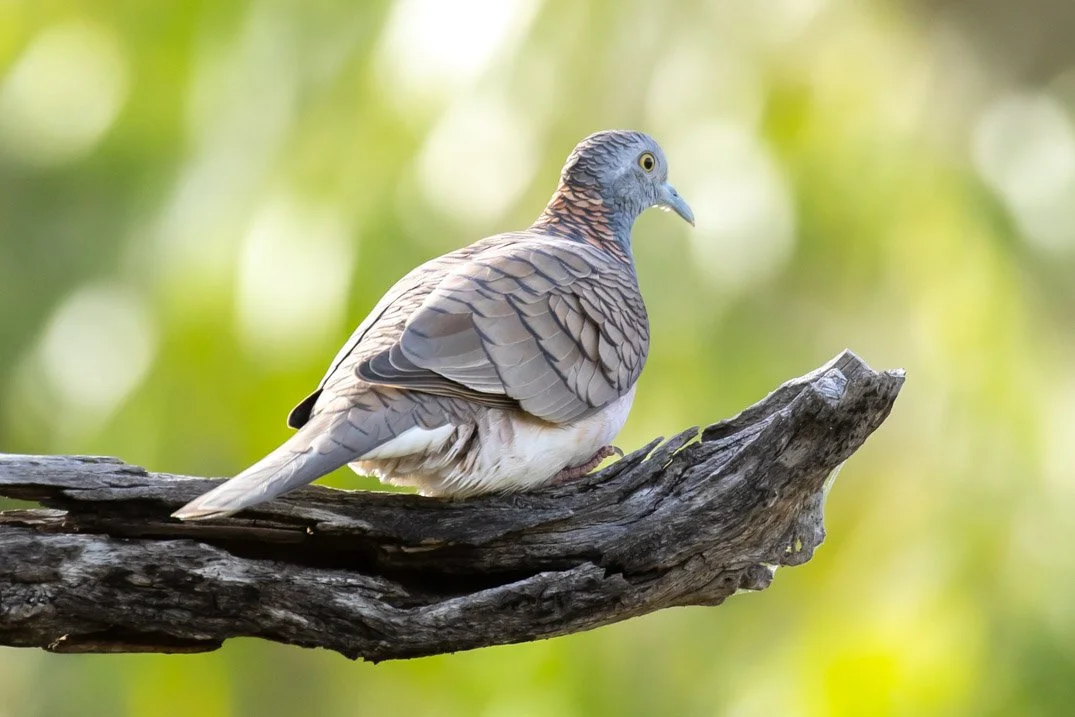
Here’s what I believe to be a Bar-shouldered Dove. Perhaps if you’re into Doves, this is a good spot. I used this Dove to dial in my setting for the environment I was in, so when I spotted a “cool” bird my camera was ready to fire. From memory, this was the only worthy bird shot that hike. I guess that’s what I get for being a bird snob.
2. Evidence of a bird, not of where a bird was.
After millions of years of evolution birds are far more adept and in tune with their surroundings. So when a cumbersome adult-sized human comes crunching through the bush, no matter how quietly I try, the bird has already heard me and more than likely flown off.
There’s nothing quite like spending a few hours out in nature, getting home freshly showered with a cup of French Earl Grey and looking at photos of empty branches. It’s hard to caption these shots “Trust me, I promise you there was a Kookaburra eating a snake on this branch 2 seconds earlier”
We all want to get up close to the bird to capture it’s details however you can’t just rush in or you’ll leave with nothing. “A bird on the SD card is worth two in the bush” or something.
So when I spot a bird often from afar, I take a photo. It may not be the best photo but at least I have something to identify it by. Once I have taken the photo I then take another step or 2 toward the bird fixing the angle as I go. Perhaps a couple steps to my right might give a nicer background. And then, take another photo.
Rinse and repeat until you’re happy with the composition. I’ve found this method doesn’t spook the bird so quickly and helps me slow down in the moment. Sometimes I might leave with only 1 or 2 photos but on other occasions the birds can be real posers.
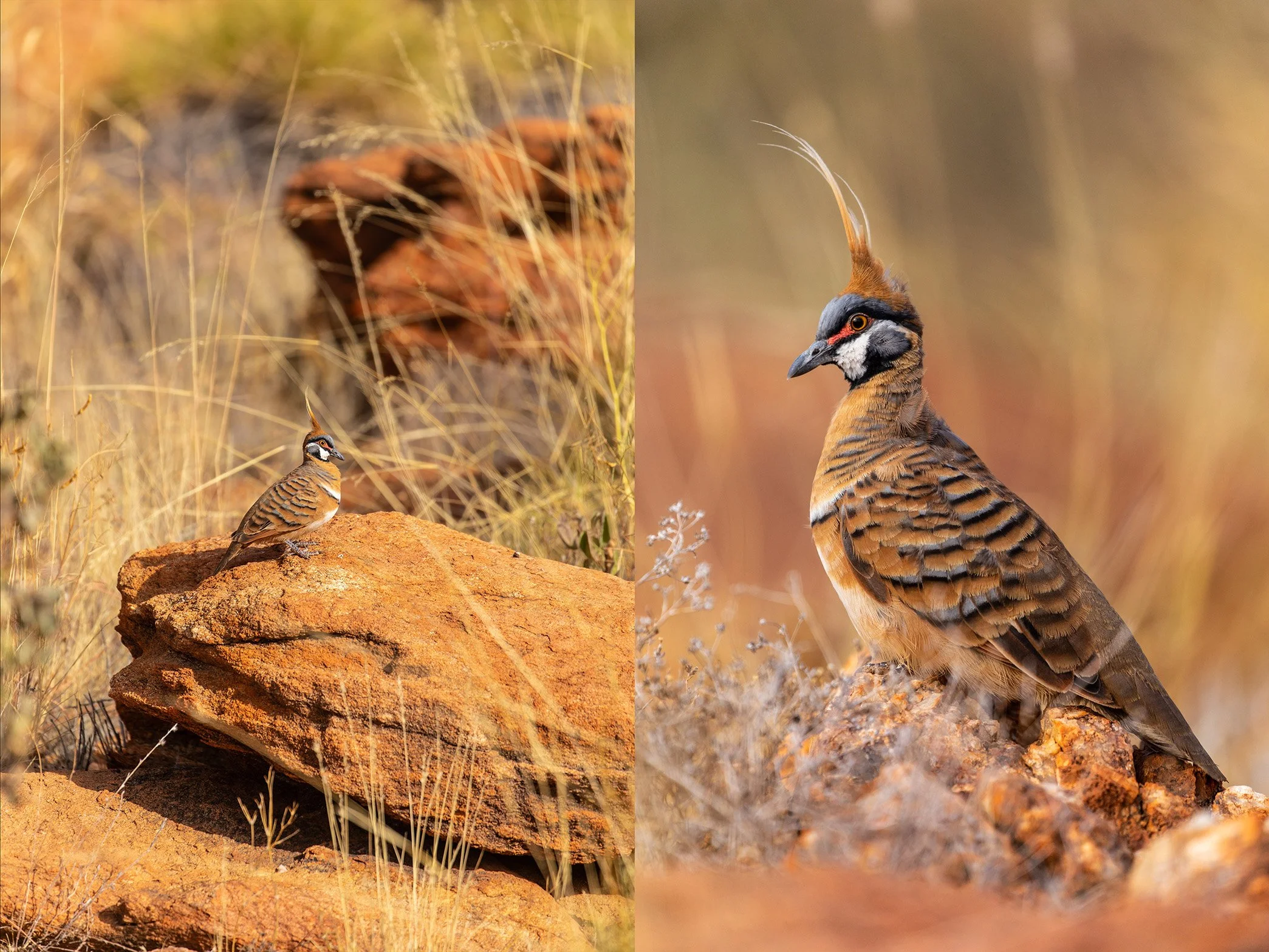
Here’s an example where this method has paid off. The photo on the left is from when I first spotted 3 Spinifex Pigeons. Sure it’s a nice photo but nothing to write home about. However, after creeping forward slowly on my stomach, I spotted another Spinifex Pigeon and the comparison is chalk and cheese. By getting down low and a few steps closer I could really isolate the bird, have nice bokeh and capture what makes this bird so unique.
3. After all that creeping, sometimes the answer is to stop.
I saw a reel on Instagram once of a lady who had attached nectar pots to her hat, and the hummingbirds flew right in front of her eyes. Meanwhile in Australia cyclists attach cable ties to their helmets to keep the Magpies away. After all that creeping sometimes you can stop and let the birds come to you or come for you.
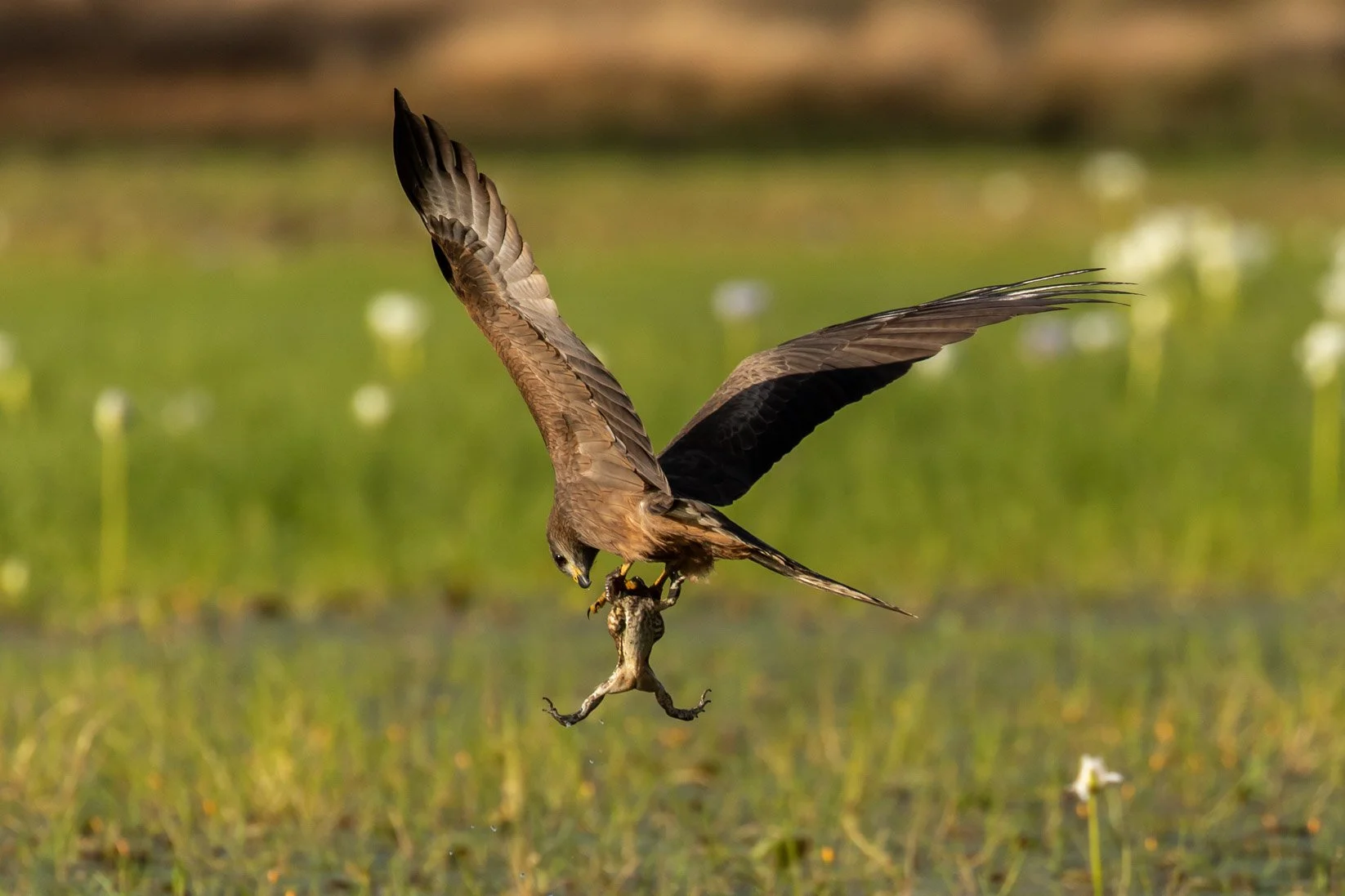
After breaking down on the Queensland/Northern Territory border I was forced to sit by a billabong for a couple days. And in the process of sitting down to fix my Landcruiser (with a can of baked beans) I realized the Black Kites were putting on a show for me, picking cane toads out of the water.
To sum it up I don’t really know what I am doing and that’s fine, whether I am scaring birds away or staring blankly at a tree it’s rewarding to be outside
and if it’s windy I’ll go looking for kites.